Islamic Nikah Process in Pakistan: Complete Guide to Shariah, Law & Common Questions
Why Islamic Nikah Matters in Pakistan Today
In Pakistan, Nikah is more than a cultural event. It is a sacred agreement made in front of Allah. It is the foundation of family life and the beginning of a halal relationship between a man and a woman. While weddings may include many customs and celebrations, the real importance lies in the Islamic contract itself.
Allah says in the Qur’an:
وَمِنْ آيَاتِهِ أَنْ خَلَقَ لَكُم مِّنْ أَنفُسِكُمْ أَزْوَاجًا لِّتَسْكُنُوا إِلَيْهَا وَجَعَلَ بَيْنَكُم مَّوَدَّةً وَرَحْمَةً
“And among His signs is that He created for you spouses from among yourselves that you may find tranquility in them; and He placed between you affection and mercy.”
(Surah Ar-Rum 30:21)
Nikah is meant to bring peace, love, and mercy. However, many families mix culture with religion, which sometimes creates confusion about what is truly required in Islam. This guide explains the Islamic Nikah process in Pakistan in simple and clear language, covering religious rules, legal requirements, and common misunderstandings.
Islamic Nikah Process in Pakistan (Step-by-Step Explained)

The Nikah process in Pakistan usually begins with a proposal. A family approaches another family for marriage. In Islam, the man and woman are allowed to see each other and speak respectfully before making a decision. The Prophet ﷺ encouraged this and said:
“Look at her, for that is more likely to create love between you.”
(Jami’ at-Tirmidhi)
Once both sides agree, many people perform Salat al-Istikhara to seek guidance from Allah. Mutual consent is extremely important. A forced marriage is not valid in Islam. The Prophet ﷺ cancelled marriages where women were forced into them (Sahih al-Bukhari).
Before the Nikah ceremony, the amount of mehr is discussed and agreed upon. Mehr is the bride’s right and must be decided clearly.
On the day of Nikah, a Nikah Khawan or Qazi conducts the ceremony. The key part of the Nikah is ijab and qabool, which means offer and acceptance. The bride and groom clearly state their acceptance. Two adult Muslim witnesses must be present.
Often, verses from the Qur’an are recited in the Nikah khutbah. For example:
يَا أَيُّهَا النَّاسُ اتَّقُوا رَبَّكُمُ الَّذِي خَلَقَكُم مِّن نَّفْسٍ وَاحِدَةٍ
“O mankind, fear your Lord, who created you from one soul…”
(Surah An-Nisa 4:1)
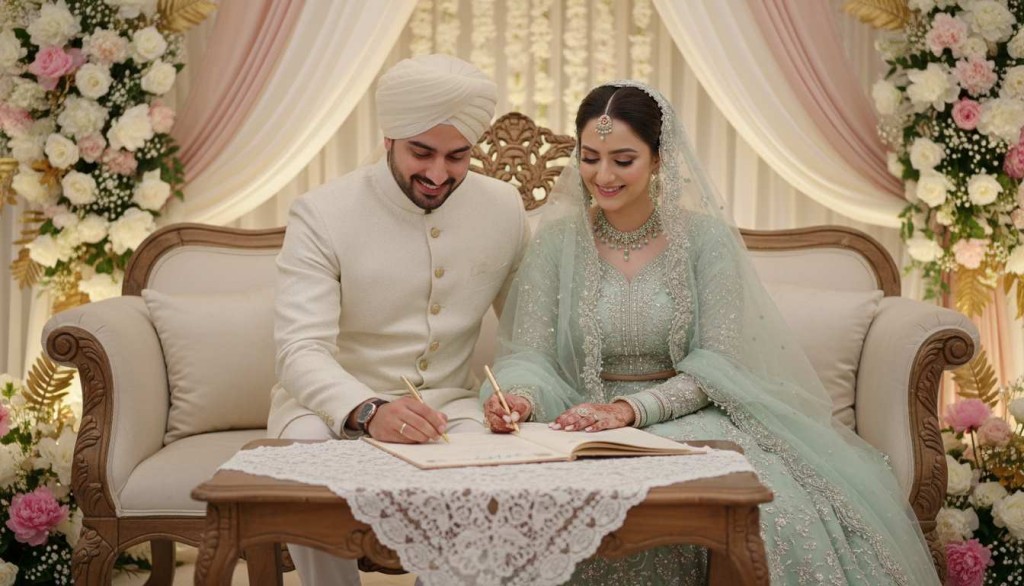
After this, the Nikah Nama (marriage contract) is signed. In Pakistan, registration is required under the Muslim Family Laws Ordinance 1961. Even if the Nikah is Islamically valid, it must also be legally registered to protect the rights of both husband and wife.
Later, the Walima is held. Walima is Sunnah. The Prophet ﷺ held a simple Walima and encouraged simplicity (Sahih al-Bukhari).
What Makes a Nikah Valid in Islam?

Islam makes Nikah simple. There are clear conditions that must be fulfilled.
First, there must be a clear offer and acceptance in the same gathering. Both parties must understand and agree willingly.
Second, there must be two trustworthy Muslim witnesses. The Prophet ﷺ said:
“There is no Nikah without a wali and two witnesses.”
(Abu Dawood)
Third, both the bride and groom must give free consent. Islam does not allow forced marriages. A woman once complained to the Prophet ﷺ that her father married her without her consent, and he gave her the choice to continue or cancel the marriage (Sahih al-Bukhari).
Fourth, mehr must be agreed upon. Allah commands in the Qur’an:
وَآتُوا النِّسَاءَ صَدُقَاتِهِنَّ نِحْلَةً
“And give the women their dowries graciously.”
(Surah An-Nisa 4:4)
If these main conditions are fulfilled, the Nikah is valid in Islam.
Role of Wali in Nikah

A wali is the guardian of the bride. In most cases, this is her father. If the father is not available, then another close male relative can act as wali.
The role of the wali is to protect the bride’s interests. He ensures that the groom is suitable and that the bride is not being pressured. The wali should act with fairness and care.
In the Hanafi school of thought, an adult woman can conduct her own Nikah if the groom is suitable. However, involving the family is strongly recommended to maintain harmony and avoid future problems.
The wali should not reject a good proposal without valid Islamic reason. Marriage in Islam is about balance, protection, and mutual respect.
Mehr in Islam: Rules, Amount & Misconceptions in Pakistan

Mehr is a mandatory gift from the groom to the bride. It is not a cultural custom. It is a religious obligation.
Allah clearly commands:
وَآتُوا النِّسَاءَ صَدُقَاتِهِنَّ نِحْلَةً
“And give the women their dowries graciously.”
(Surah An-Nisa 4:4)
There is no fixed minimum or maximum amount for mehr. The Prophet ﷺ once approved a marriage where the mehr was a simple iron ring (Sahih al-Bukhari). This shows that sincerity matters more than wealth.
In Pakistan, some families set extremely high deferred mehr amounts for social status. Others treat mehr as a formality and never pay it. Both approaches are incorrect. Mehr is a serious obligation and must be honored.
Islam encourages simplicity. The Prophet ﷺ said:
“The best marriage is the one that is easiest.”
(Reported in Bayhaqi)
Mehr should be reasonable, realistic, and paid with honesty.
Nikah Without Parents’ Consent
This topic is sensitive and widely discussed in Pakistan.
According to the Hanafi school, if a woman is an adult and marries a suitable man, her Nikah can be valid even without wali consent. However, in other Sunni schools, wali consent is required for validity.
Even when technically valid, secret marriages can create social and family problems. Islam encourages maintaining family ties and respect.
Parents should not reject proposals based on caste, wealth, or social pressure alone. The Prophet ﷺ advised choosing a spouse based on religion and character (Sahih al-Bukhari).
Marriage decisions should be made with wisdom, patience, and balance.
Online Nikah in Islam

With modern technology, online Nikah has become common, especially when one party is abroad.
Islam does not require both parties to be physically in the same room, as long as offer and acceptance are clear, witnesses are present, and identities are confirmed.
However, in Pakistan, the marriage must still be registered legally. Without documentation, future legal issues may arise.
Online Nikah is allowed if all Islamic conditions are fulfilled properly and honestly.
Common Nikah Mistakes in Pakistani Families

One common mistake is making marriage too expensive. Islam does not require large wedding halls, heavy dowry, or unnecessary cultural rituals.
Another mistake is delaying Nikah for years due to financial expectations. Islam encourages timely marriage to protect modesty and society.
Ignoring the details in the Nikah Nama is also risky. Couples should read and understand the contract before signing.
Sometimes families focus on caste or social status instead of character and deen. The Prophet ﷺ emphasized religious commitment as the most important quality.
Simplicity brings blessings. Complication brings stress.
Nikah vs Marriage Law in Pakistan
Islamic Nikah fulfills religious requirements, but Pakistani law also requires official registration.
Under Pakistani law, marriages must be registered through a licensed Nikah registrar. If not registered, legal rights such as inheritance, maintenance, or divorce claims can become complicated.
Islam encourages fulfilling agreements and protecting rights. Therefore, it is important to complete both Islamic and legal requirements.
This ensures that the marriage is protected both in this world and in the sight of Allah.
Conclusion: A Blessed Beginning

Nikah in Islam is simple, clear, and beautiful. It is based on consent, responsibility, and faith. When families follow Islamic guidance instead of unnecessary customs, marriages begin with peace and blessings.
Allah reminds us:
وَعَاشِرُوهُنَّ بِالْمَعْرُوفِ
“And live with them in kindness.”
(Surah An-Nisa 4:19)
Marriage is not just a celebration for one day. It is a lifelong trust.
May Allah bless all marriages with sakinah, mercy, and strong faith. Ameen.
Frequently Asked Questions (FAQ)
1. What are the main requirements for a valid Nikah in Islam?
A valid Nikah requires offer and acceptance, two witnesses, agreed mehr, and free consent of both bride and groom.
2. Is Nikah valid without parents’ consent in Pakistan?
In the Hanafi school, an adult woman may marry without wali consent if the groom is suitable. However, family involvement is highly recommended.
3. Is online Nikah allowed in Islam?
Yes, if all Islamic conditions are fulfilled and legal registration is completed.
4. What is the minimum mehr in Islam?
There is no fixed minimum. Any agreed amount or valuable gift can qualify.
5. Is court marriage enough in Pakistan?
Court registration handles legal matters. Islamic Nikah fulfills religious requirements. Ideally, both should be completed.
19th February, 2026
